by Cyna Mirzai
The ongoing construction of the Mountain Valley Pipeline is encroaching on tribal land, bringing upon a myriad of health risks, from heat-related illnesses to infectious diseases. While countless rural communities are encountering these health hazards, indigenous communities in particular are dealing with the brunt of these impacts, and this isn’t the first time either.
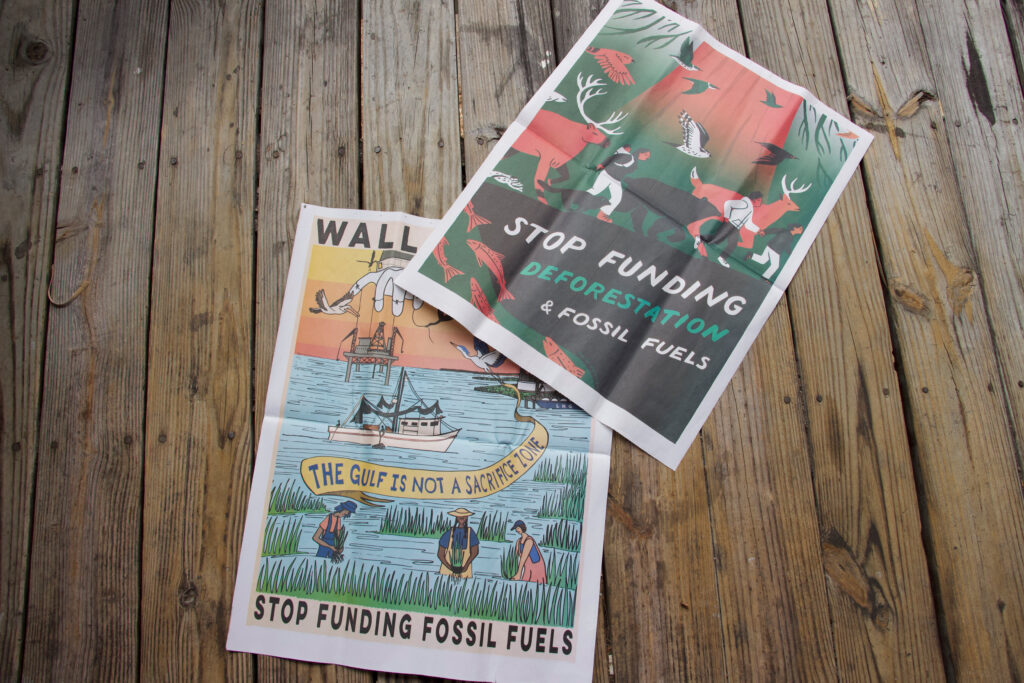
According to the Southern Environmental Law Center, the pipeline cuts through the homes of low-wealth and indigenous people in West Virginia and Southwest Virginia, making these communities “sacrifice zones.” Sacrifice zones are communities in proximity to pollution produced by an intensive and concentrated industry.
Why are communities of color, specifically indigenous communities, encountering the worst of these effects? Akim Reinhardt, an associate professor of history at Towson University, points to the settler colonialism that Europeans engaged in North America at the expense of indigenous peoples as the impetus.
“We know colonialism has been around as long as humans have been around,” Reinhardt said. “But settler colonialism is the version where one group moves into one region controlled by another group and displaces them.”
Reinhardt explains that the settler colonial system that created the United States began by first conquering native nations, taking their lands and leaving them with small holdings known as reservations.
Since tribal governments do not own their reservation lands, the federal government continues to own these lands. When the government has control of a tribe’s land, and most indigenous communities do not have the money to hire attorneys, it becomes much easier to construct a pipeline.
“It’s easier to get approval of a project and access to land when the residents are made up of minority populations who have fewer resources,” said Kekek Stark, professor of law at the University of Montana. “You rarely see these kinds of construction projects pop up on the land of wealthy people because they have the power to make it stop.”
Stark explains the importance of asking for tribal consent for any form of chemical construction on native land. Tribal consent is authorization through a written agreement with the tribe, if the tribe so requires, to a grant of right-of-way across tribal land.
One of the most notable examples of pipeline construction without concern for indigenous livelihood is the Dakota Access Pipeline (DAPL). According to The Indigenous Foundation, this pipeline was a 1,172-mile-long underground pipeline constructed by Energy Transfer Partners in 2017.
However, the construction of the pipeline took place on land reserved for the Lakota and Dakota tribes through the Fort Laramie Treaty, granting millions of acres of land to be reserved and used by the tribes indefinitely. By violating the treaty, the pipeline exposed the indigenous community’s land and water supply to contamination and destroyed places that held cultural significance to the tribe’s heritage. Resistance against this construction and operation of the DAPL began a movement to end the operation of pipelines on indigenous lands.
When dissecting the relationship between pipelines and indigenous communities, Reinhardt clarifies that indigenous people still maintain agency. In certain instances, native nations will decide to engage in extraction because they can receive economic benefits. Other times, in the instance of the Mountain Valley Pipeline, it is forced onto them without any advantages.
“Settler colonialism is similar to capitalism in that it’s a system,” Reinhardt said. “These two systems can overlap and interlock at times. So, when these things happen against the will of native nations, it becomes a degradation of native sovereignty.”
